Flexibility as the Foundation of Modern Office Design
Flexibility remains one of the key pillars of modern office design. Rigid office layouts are increasingly being replaced by dynamic environments that seamlessly adapt to diverse work needs. Think of movable furniture, modular workstations, and multifunctional spaces. This allows organizations to optimize their space while giving employees the freedom to choose how and where they work.
A great example is our work for The Social Hub in Glasgow. As a certified B Corp, The Social Hub asked us to design a dynamic, multifunctional space that reflects their hybrid hospitality concept. The result? A forward-thinking work environment where flexibility and community building come together—both essential values in modern office design.
More and more, we see offices featuring flexible furniture, movable bar setups, and interiors reminiscent of trendy coffee shops. Such workspaces can easily be transformed into event spaces, making them perfect for hybrid work models and evolving employee expectations.
From Workplace to Meeting Place
The office is no longer just a place to work; it is increasingly becoming a space where people come together and feel at home. By integrating elements from residential and hospitality environments—such as comfortable lounges, atmospheric lighting, and informal seating areas—offices become more inviting and welcoming.
A great example is our project for ZonMw in The Hague. We transformed a traditional office into an open, sustainable, and social work environment. The way of working at ZonMw has changed in recent years, requiring the office to evolve accordingly. Employees now come to the office to collaborate and connect in a space that feels as comfortable as home.

Technology as a Catalyst for More Efficient Workspaces
Technology plays an increasingly significant role in modern office design. From app-controlled lighting and climate regulation to sensors that measure occupancy—smart innovations make workplaces not only more user-friendly but also more sustainable.
By strategically implementing technology, we help organizations reduce their energy consumption and achieve their sustainability goals without compromising comfort. Employees can fully focus on their tasks while sustainability becomes a natural part of their daily routine.
For Ricoh’s new headquarters in the Netherlands, we ensured their products and services were seamlessly integrated into the work environment. In addition to office spaces, two Lab areas were created where products are tested, and training sessions take place. Thanks to Ricoh’s ‘managed workplace services,’ meetings run smoothly, and employees can collaborate efficiently—wherever they are.
Our colleagues at Parella France are also committed to workplace innovation. In the latest edition of Office Paper 3, they explore the impact of technology on work environments and share insights on the latest trends and developments. Read more about workplace innovation in Office Paper 3.
Well-Being: The Key to Productivity
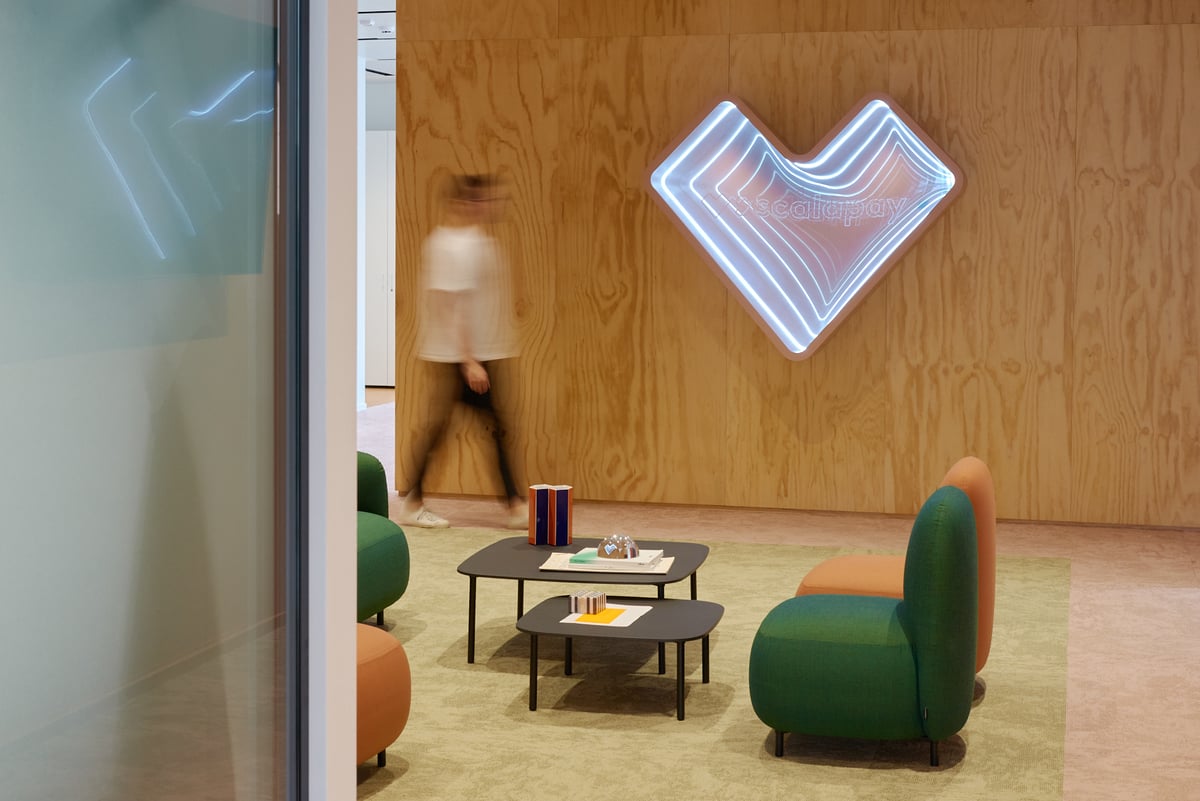
Employee well-being is gaining more attention in modern office design. A healthy work environment supports both mental and physical well-being. In our project for Scalapay’s Italian office, for example, we focused on spaces with abundant natural light, quiet work zones, and aesthetically integrated sound insulation.
Additionally, relaxation areas are becoming more common, allowing employees to recharge and recover throughout the workday.
Sustainability and Circular Principles as a Guiding Force
Future-proof offices are not only flexible and technologically advanced but also sustainable. Circular principles are increasingly applied, with reusable and recycled materials playing a key role. Furthermore, the design process now considers the eventual dismantling of office spaces from the outset.
For Trust’s headquarters in Dordrecht (Netherlands), we carried out a sustainable upgrade. Two floors were completely renovated, including floors, walls, and custom furniture. At the same time, we reused and recycled as much of the existing interior as possible. Thanks to a smart circular design, the client was able to enhance sustainability while also reducing costs.
Shaping the Future of Modern Office Design Today
Whether it’s sustainability, well-being, or flexibility, at Parella, we create workspaces that meet today’s needs and are prepared for tomorrow’s demands. Modern office design is not just an investment in a pleasant work environment but also in employee productivity and satisfaction.
We believe that an inspiring and future-proof workspace makes a difference—for organizations and their employees.
Would you like to learn more about our process? Read more about our approach here.